
Dental Dam Use During Root Canals: What a Network Study Tells Us About Everyday Practice
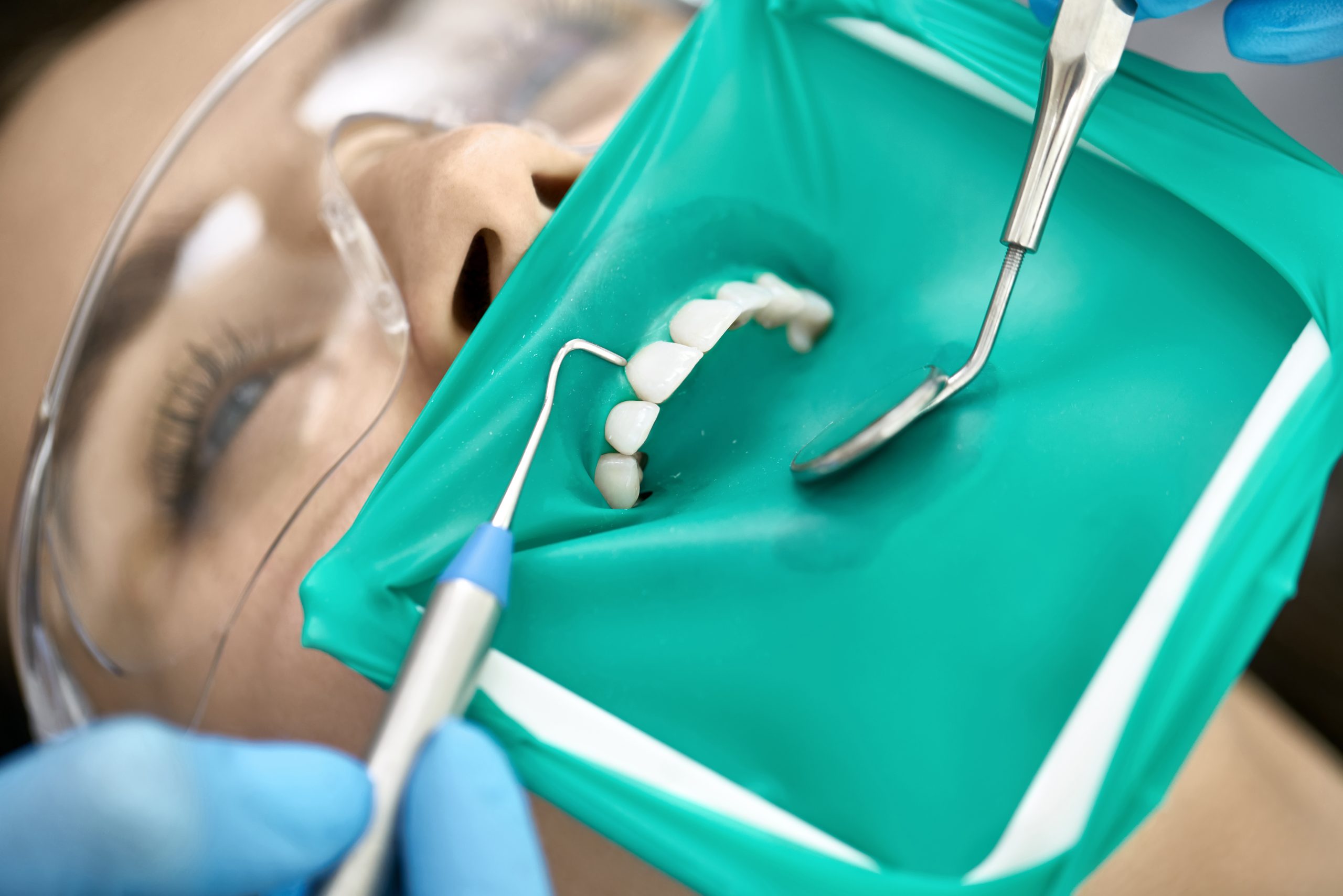
Dental dam isolation protects the patient, the clinician, and the treatment itself during root canal treatment (RCT). Professional organizations, including the American Association of Endodontists, consider it the standard of care. A new study from the National Dental Practice-Based Research Network (the Network) asks a practical question: how often does that standard show up in real-world practice, and what shapes the choice?
The answer, published in the Journal of Dentistry, draws on real-world data from Network practices nationwide.
The Study at a Glance
Drs. Alan Law and Rhett Berg, along with Drs. Ellen Funkhouser, Rahma Mungia, Donald Nixdorf, Ernest Lam, and Gregg Gilbert, analyzed data from 153 Network dentists: 49 endodontists and 104 general dentists. Together, these clinicians enrolled 1,860 adult patients who needed non-surgical RCT, across all six Network regions. After exclusions, the team analyzed 1,701 patients.
For every RCT, dentists recorded detailed information before and after treatment, including whether they placed a dental dam. That tooth-by-tooth reporting gives a closer look at actual behavior than a questionnaire study of general habits, which the Network had done previously.
Key Findings
- Endodontists used a dental dam for 99% of teeth.
- General dentists used a dental dam for 72% of teeth, with wide variation between individual dentists (standard deviation of 40%).
- General dentists in large group or academic settings were significantly more likely to use a dental dam (odds ratio [OR] 6.2, p=.04).
- General dentists in the Midwest or Western Network regions were also significantly more likely to use one (OR 5.2, p=.005).
- Dental dam use among general dentists was not associated with tooth type, sex, age, or professional membership.
Practice Setting Matters More Than Individual Traits
The strongest predictors of dental dam use were where a general dentist works, not who the general dentist is. Dentists in large group and academic practices had about six times the odds of using a dental dam, and regional differences were nearly as large. Age, sex, and professional membership made no significant difference.
We read that as encouraging. Habits shaped by the practice environment, such as shared protocols, staff training, and equipment on hand, can change when the environment changes. Targeted institutional and regional strategies, as the authors suggest, could help close the gap.
Progress Since Earlier Network Findings
This study builds on earlier Network work. An earlier Network survey of 449 general dentists found that 45% used a dam for every RCT. The two studies measured use differently, since the earlier questionnaire study asked dentists about their habits; the current clinical study counted individual teeth. Even so, the authors note that dental dam use has improved compared with earlier reports.
A 72% average still leaves room for improvement. It also shows that many general dentists are already making dental dam isolation part of routine care, often while managing busy schedules and a wide mix of cases.
What This Means for Our Network
You already do the work that makes studies like this possible. The 104 general dentists and 49 endodontists in this study recorded every RCT they completed and shared how they actually practice. That candor is what lets us identify where support will have the most impact.
Future Network research can test practical approaches, such as practice-level protocols or peer learning across regions, and measure whether they raise dental dam use and improve outcomes.
Learn More
Reference: Law AS, Berg R, Funkhouser E, Mungia R, Nixdorf DR, Lam EWN, Gilbert GH; National Dental PBRN Collaborative Group. Factors associated with dental dam use during non-surgical root canal treatment: a National Dental PBRN study. J Dent. 2025;164:106258. doi:10.1016/j.jdent.2025.106258.
Interested in Becoming a Member?
Related Posts