How Did the Network Help Shape Noha Rashwan’s Path in Digital Dentistry?
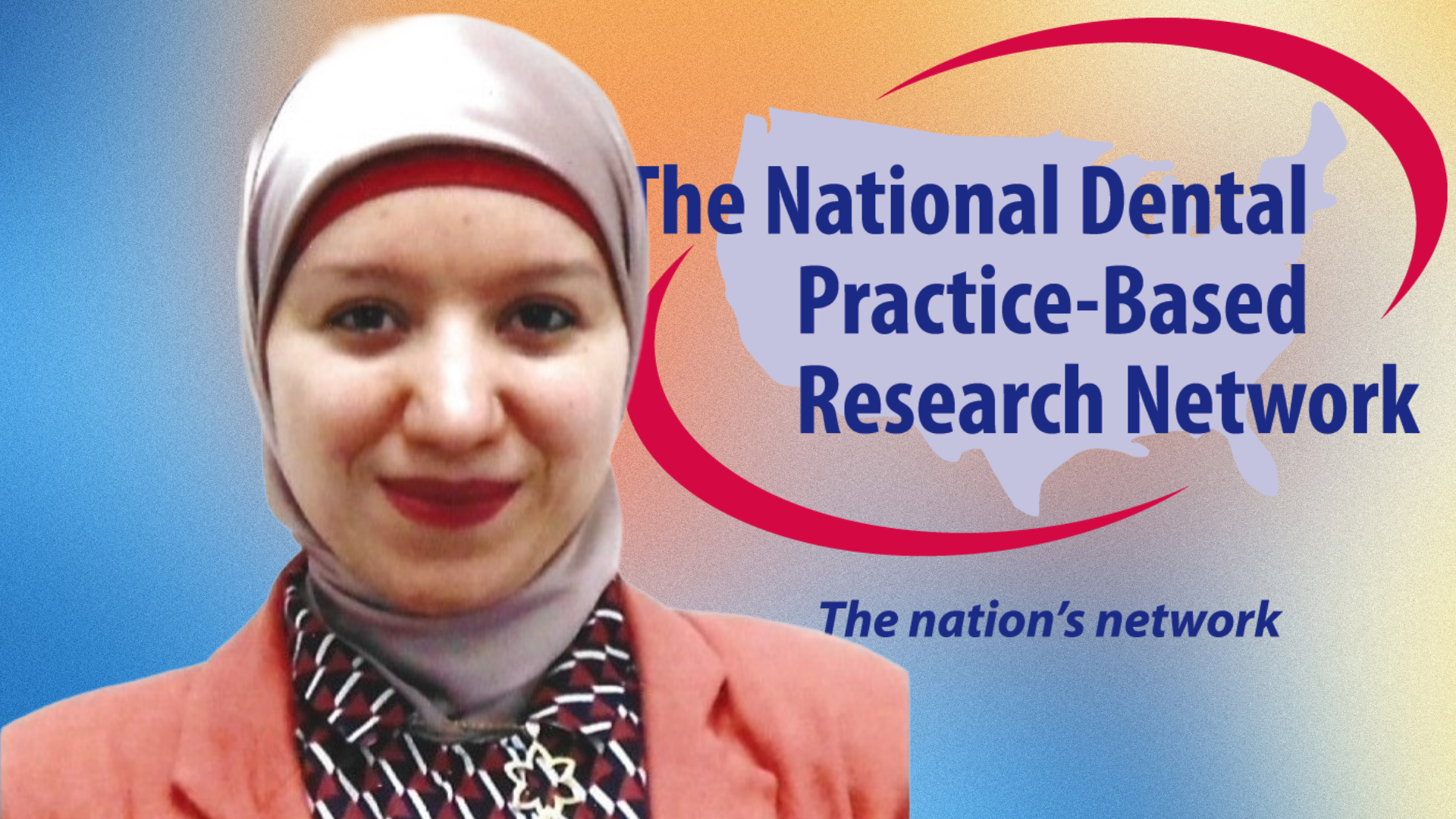
What happens when a clinician in training gets early exposure to rigorous, practice-based research? In Noha Rashwan’s case, that experience helped connect hands-on clinical development with a growing commitment to digital dentistry, teledentistry, and artificial intelligence-driven oral health research.
She built research skills inside a real-world study environment
During her time with the National Dental Practice-Based Research Network, Rashwan contributed to the eHygiene mobile dentistry study, supporting both data collection and qualitative analysis for a project later published in 2023. Over roughly one academic year, she worked across several study activities, gaining direct experience with mixed-methods research.
Her contributions included transcribing interviews with dentists, hygienists, and patients; conducting qualitative coding in MAXQDA; helping develop codebooks; identifying emerging themes; assisting with interpretation of acceptance, barriers, usability, and workflow impact; and contributing to manuscript preparation and revisions. Those responsibilities gave her a clearer understanding of how the Network turns observations from practice into structured evidence that can inform future care models.
The eHygiene study expanded her view of what care can look like
Rashwan’s reflection shows how research experience can influence clinical imagination. She described the project as reinforcing the value of patient-generated data and remote care models, two elements that continue to shape conversations about access, monitoring, and technology-supported care in dentistry.
That perspective matters because the eHygiene project did more than teach research methods. It helped illustrate how digital tools can support patients and care teams when designed around workflow, usability, and real practice conditions. For emerging clinicians and researchers, that kind of experience can turn abstract interest into a focused professional direction.
Network collaboration helped prepare her for complex research questions
Rashwan also credited her time with the Network for strengthening her confidence in working with multi-site research teams. That kind of collaboration is a defining feature of practice-based research, where clinicians, investigators, and staff contribute different forms of expertise to answer questions that matter in everyday settings.
For practitioners reading her story, that experience may feel familiar. The Network works best when members bring both curiosity and practical insight, and Rashwan’s trajectory reflects how meaningful that environment can be for someone building a career at the intersection of clinical care and discovery.
Her next steps continue the connection between innovation and patient care
After completing her two-year Advanced Education in General Dentistry (AEGD) program, Rashwan moved on to a one-year AEGD program for New York State licensure while also pursuing a master’s degree. Those next steps show a clear throughline from her Network experience to her current academic and professional goals, where she will be focused on artificial intelligence applications for gingivitis detection and classification.
A personal detail stands out in that progression: she did not leave her interest in research behind when clinical training intensified. Instead, she carried it forward into a field that asks how technology can support earlier detection, better interpretation, and more responsive patient care.
Bringing the personal and professional together
Rashwan’s story reflects what the Network can offer clinicians and trainees who want to grow beyond traditional boundaries: a place where research skills, clinical relevance, and professional purpose develop together. When you contribute to the Network, you help create the same kind of learning environment that shaped her path and continues to strengthen the future of evidence-based dentistry.
Interested in Becoming a Member?
Related Posts