Advancing Endodontic Care Through Research: Dr. Alan Law’s Journey with the Network
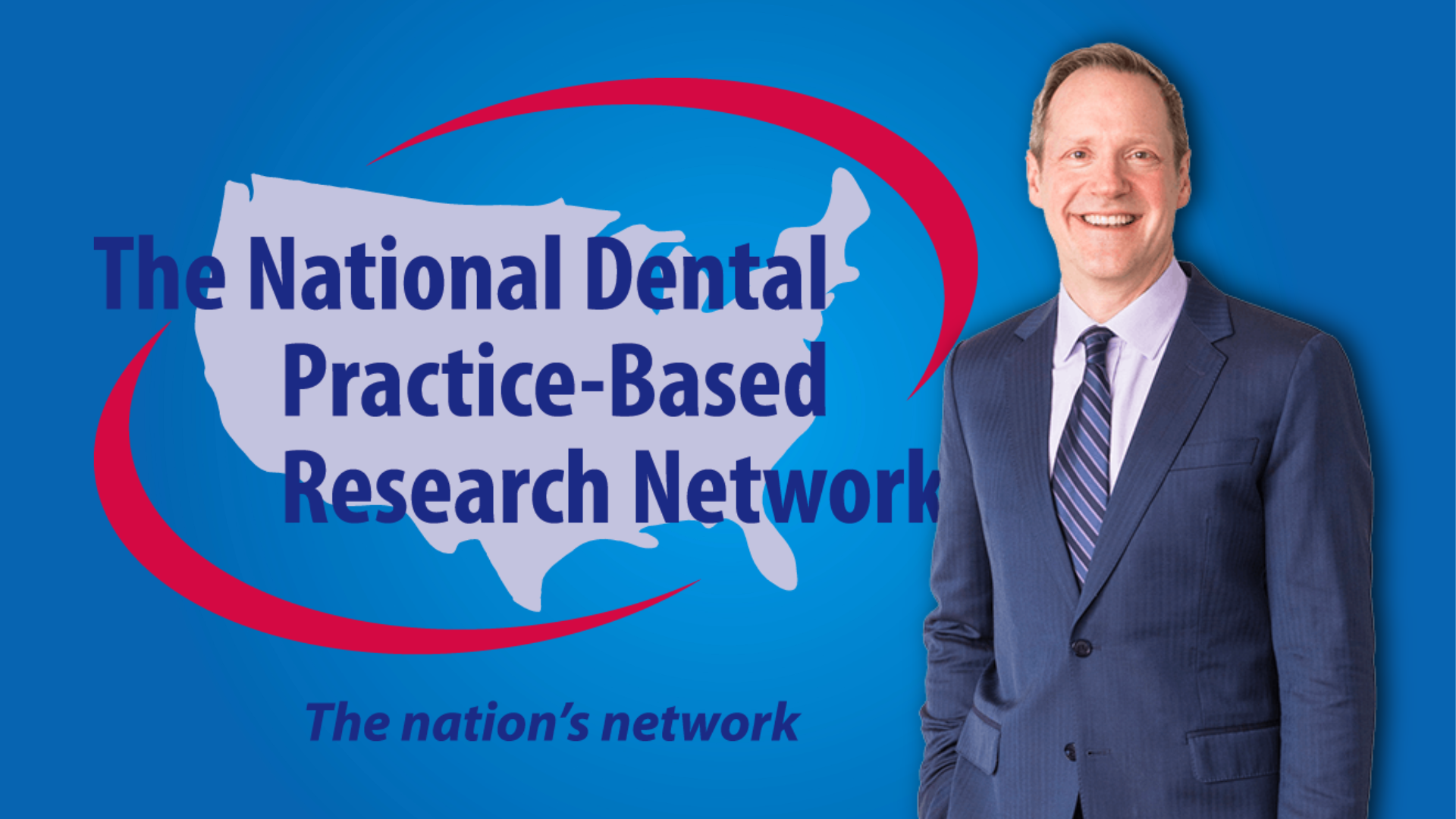
For nearly three decades, Dr. Alan Law has been a trusted endodontist in the Twin Cities area. In a video testimonial featured at the end of this article, Dr. Law shares his experience as a long-time member of the National Dental Practice-Based Research Network (the Network) and reflects on how research has shaped his clinical practice. His commitment to improving patient care led him to join the Network early in its history (first funded in 2005, though Dr. Law mentions 2015 in the video) [1]. Since then, Dr. Law has played an integral role in multiple studies that have advanced understanding of pain following root canal treatment.
From Early Studies to Groundbreaking Insights
Dr. Law began his research journey with studies focused on acute pain after non-surgical root canal treatment and persistent pain at six months. These early projects paved the way for the PREDICT study, which examined pain outcomes at both six and twelve months post-endodontic treatment [2]. Dr. Law contributed to surveys and, most recently, to the POPS study, which explored post-operative pain across various dental procedures as well as the use of a mobile health platform [3].
What the Research Reveals
One of the most significant findings from these studies is that pain after root canal treatment is influenced by more than just clinical factors. While initial pain levels predict acute pain, psychosocial factors also play a critical role in both acute and persistent pain [3]. This knowledge has transformed how Dr. Law communicates with patients, tailoring treatment strategies and setting realistic expectations.
Another key insight involves temporomandibular disorder (TMD). Research showed that 41% of patients presenting for root canal treatment screened positive for TMD, a condition often mistaken for endodontic pain [4]. Understanding this overlap has changed diagnostic approaches, ensuring that persistent pain is properly evaluated and managed.
Impact Beyond the Operatory
Dr. Law emphasizes that research doesn’t just benefit clinicians, it empowers entire dental teams and patients. His assistants actively discuss study results with patients, reinforcing evidence-based care. Sharing these findings with colleagues has sparked greater interest in research participation, creating a ripple effect across the profession.
Advocacy and Education
As a lecturer and advocate, Dr. Law has delivered over 500 presentations, many focused on Network research outcomes. He encourages general dentists, specialists, and even dental students to get involved early, highlighting the importance of bridging research and clinical practice. Through webinars, publications, and collaborations, the Network ensures that new knowledge reaches practitioners quickly, improving patient care nationwide.
Why It Matters
Persistent pain after root canal treatment affects roughly 10% of patients at six months, and about half of these cases are non-odontogenic [2]. Thanks to studies conducted in the Network, clinicians now have better tools to diagnose, manage, and prevent persistent pain. These insights not only improve outcomes but also strengthen trust between patients and providers.
I’m Dr. Alan Law. I’m an endodontist, and I’ve been practicing in the Twin Cities area for 29 years. And I got involved in the Network in the very beginning, when it was first funded in 2015. I believe our project started around 2017, and I’ve been continuing with the Network ever since.
I’ve been involved in several studies. The first study was a study, we called them study 17 and 18, which looked at acute pain following non-surgical root canal treatment and then persistent pain at six months following non-surgical root canal treatment. And then we followed up that study with what was called the PREDICT study, which was in the most recent funding cycle, looking at acute persistent pain at six months and then persistent pain at 12 months following root canal treatment. I’ve also participated in surveys along the way, and I’ve participated in the POPS study looking at post-operative pain in several different dental procedures, but of course I focus on endodontic procedures and post-operative pain and tracking patients following endodontic procedures.
01:21 – Early Studies & Key Findings
We’ve published a lot of information and findings based upon the research. We’ve focused on predictors of acute pain and persistent pain, as well as the frequency of acute pain and persistent pain. And the earlier studies were showing around 12 to 19% of the patients were reporting acute pain. And there were several predictors that we would expect that would predict post-treatment pain based upon previous research, meaning the amount of pain that you present with often predicts how much pain you’re going to have in the acute phase following root canal treatment. But we also learned that there are some psychosocial factors that can predict both acute pain and persistent pain. And this has changed the way I inform patients about what they can expect after treatment. And it also helps me tailor the treatment strategies for managing pain after root canal treatment.
03:27 – TMD and Diagnostic Insights
And particularly when patients present with persistent pain, it’s a much more involved conversation about what can we expect following root canal treatment and then what’s the expected course if they do have persistent pain after six months, is that going to continue? Is it likely going to resolve? And we also looked at what might be causing the pain and in many patients, it was TMD-type pain rather than an endodontic cause, which is very informative for me, but also for general practitioners and endodontists when they see patients presenting with persistent pain. If you don’t have a proper diagnosis, you can’t properly manage the pain. And understanding that there are non-endodontic causes for the pain is really important. And that’s been a game changer, not only for me, but for a lot of clinicians. When I present this information in different venues, practitioners are really surprised in many cases that they need to be looking at other causes for pain rather than assuming it’s failed root canal treatment or persistent infection. So this has been very helpful in informing patients, but also managing patients.
One of our more recent findings was that patients that are presenting for root canal treatment, we found that 41% of those patients screened positive using a six-question survey given prior to the root canal treatment. They screened positive for TMD. And the reason this is important is because this has not been identified as a potential cause for pain that might be confused with endodontic pain, as well as a cause for persistent pain, meaning persisting beyond the root canal treatment in the first week, but certainly persisting 3, 6, 12 months after treatment. Understanding that, I think, has increased my awareness of how I do my diagnostic tests, the types of questions that I’m asking, as well as how I inform the patient that we may be able to resolve their endodontic-related pain, but they may need to also address their TMD-related pain afterwards. So that has changed the way I perform my diagnosis, but it’s also changed the way I present my diagnostic information on how to perform a diagnosis to dentists when I lecture to them and to endodontists.
06:06 – Patient Communication & Research Impact
One of the really interesting and rewarding parts of being part of this research network was the level of enthusiasm my assistants and my team brought to the project. They were excited to be part of the studies and what I saw was that they were just as interested in getting the results as I was about our patients and then understanding how the results impacted the way we inform patients and what we can expect treatment outcomes. So even if I’m not in the room, I’m hearing my assistants talk about the results of the study with patients. And to me, that says it’s one more way that the Network is improving patient care because it’s not just the dentist practitioners that can affect the way patients expect or expectations of care and outcomes, but it’s also the entire dental team. And that’s been very rewarding for me to see. It’s also giving this information to my colleagues in the practice and having them understand and want to get more involved in the research project. A number of my colleagues have been involved in the studies on endodontic pain and outcomes, but also in other studies in the Network. As a result of being involved in one study, they want to be involved in more.
I think patients really appreciate having someone who not just makes a statement, but can back up the statement with some research findings. So saying, “I think you have this” versus “research has shown that roughly 10% of patients that have root canal treatment will present with a pain level of at least one for at least one day a month at six months following treatment.” And this was based upon a study that followed over 800 patients that had root canal treatment. That’s much more impactful to the patients. First of all, they don’t feel like they’re crazy and the practitioners don’t think that there’s something wrong with the way the patient’s perceiving their pain. It’s actually helping us understand this is a real occurrence and there are predicting factors and there are things we should be looking for when patients present with pain. So when I explain that to the patients, it’s an informative conversation. They appreciate that. I often hear that they like that level of information. Not all patients, but many patients like that level of information. And it changes the conversation when you say this may not be the root canal treatment that’s causing the pain. I’m going to be looking at other possibilities. I’ll be checking to see if your muscles are sore in the area because this can refer to the tooth. That was another finding from the research that we did some follow-up projects and they appreciate that information. They feel like they’re really being listened to and that the practitioners care about their outcome and the progress of their disease state following the root canal treatment.
08:00 – Team Engagement & Collaboration
The Network is very involved in getting practitioners to participate to the level they want to. Some are just participating with surveys, some participate by conducting the research in their practice, enrolling patients, some get involved in writing the publications, some get involved in presenting this information on a national or international level, and some will just be involved in just working with their practice in their own clinical setting. A great example of how this has benefited one of the dentists I worked with was, in the very first study, there was an opportunity to present at the International Association of Dental Research meeting in Brazil. There was a general practitioner who had never really read a scientific journal. He had never participated in research. And he had the opportunity to not only be involved in the abstract, but he got to go to the international meeting and present the findings. This has changed the way he has practiced, but also changed the way he approaches reading journals and understanding what’s happening, what the outcomes are in the journal that are being presented, but how it could impact his dental practice. So that to me was really exciting.
10:33 – Education & Lectures
I’ve had an opportunity to present research findings on multiple occasions, local, national, and some international lectures. And I’m always incorporating the findings from the National Dental Practice-Based Research Network in the presentations because it’s real-world examples of how we can measure post-treatment pain in my case, and then how we can potentially impact it once we understand more about the causes of the pain and the likelihood of having pain. We can better address it and tailor it more to the individuals who are more likely to experience the pain. Ever since I came to Minnesota, so for the past 27 years, I’ve been an adjunct faculty at the University of Minnesota, but I also give a lot of lectures to dental students and residents around the country. And one of the topics that’s most requested when I am asked to present at meetings is the findings from the Network. It’s relevant to residents and dental students—they want to know what’s going to happen after they do root canal treatment. There’s a lot of self-blame when dentists perform treatment if patients have pain afterwards and understanding that if you do enough endodontic treatment, you’re going to see patients that present with severe pain in the first week after treatment. Now, that’s important for them to understand. It’s also important for them to understand who’s more likely to have the pain so that they can better address that preemptively, potentially in some patients, and understand that there are some non-endodontic causes for the pain that they should be looking at so they don’t misdiagnose and hence mismanage the pain.
So I’ve given over 500 lectures since I started my endodontic career locally, nationally, and internationally. And I would say probably over 50% of those have pertained to research and outcomes from the Network studies. And they’re very well received because they’re relevant to clinical practice. From the beginning, my experience in the Network has helped me understand how important it is to have as much involvement as possible from general dentists and endodontists and other specialists in dentistry. So I’ve been a huge advocate reaching out to dentists and asking them to get involved. And it’s amazing to see the level of enthusiasm from dentists who get involved in one study and they’re sort of hooked. They can see the impact they’re having. Their team likes being in the research network. They like to be involved in the Network. And then some of them ask, “Can I be part of a paper?” And yes, there are opportunities for them to do that. Some ask to be part of presentations, and there’s an opportunity to do that. So it doesn’t take much for many of the doctors that I talk to to say, “Yes, I want to be part of this.” I’m also, when I’m meeting dental students and I’m meeting residents, I’m asking them, “Get involved earlier in your career because it’s so important to stay engaged in a lot of different areas in order to maintain your continuing education.” That’s so important as part of your career, but also to have an impact on not only how you practice, but how future practitioners will practice the specialty of endodontics and in their dental practice. So I’m continually asking people to get involved and I’m going to continue to do that even if I’m not in the Network and directly designing studies. If I’m just a practitioner investigator, I’m going to be a huge advocate for bringing other people in because of the impact it can have on their careers and the broader dental community.
13:20 – Dissemination & Closing Thoughts
One of the nice things about being in the Network is you get on an email distribution list and you can see all the studies that are going on, your opportunity to participate in those studies, but you can also see the outcomes in the studies. Just recently I saw an email for a seminar or webinar on the postoperative pain study which of course is a lot of interest to me because of my research interest in pain. For practitioners, this is a great way to see what the Network is doing but also how it can impact your practice and how it may impact the future of dentistry. The Network is not just about the research, it’s about the dissemination, and they do a great job giving that information to practitioners. The Network does a great job disseminating the information, the research outcomes through an email distribution list, and they also have meetings where this information is presented, both research meetings and clinical meetings. The webinars during the day are great and the fact that they’re recorded so that you can watch them on your own time if you can’t watch them in the middle of a clinic day is really important too. Lots of accessibility for getting the information, and I’m hoping that more practitioners take advantage of that because of the importance of these clinical findings so that we can shorten the time between when the research is conducted, the outcomes are published, and it has an impact on clinical practice.
It is so important for the Network to engage with dentists in a lot of different ways, direct recruitment, but also they can engage dentists through associations. And through my role with the AAE and the Network, I was able to get some collaboration where we not only helped design parts of the studies, for example, we helped modify a Case Difficulty Assessment Form for root canal treatments, determining which factors are important and determining how difficult the root canal treatment will be. We also helped get some funding for some follow-up studies that were done after we published the initial research findings. So for example, we found that roughly 10% of patients at six months after treatment had persistent pain, but we didn’t know what the cause of the pain was. By bringing this information to the Foundation for Endodontics, the American Association of Endodontics Foundation, we were able to get funding that allowed us to bring in patients that had participated in the Network research and do exams on them to determine what the cause of the pain was in those patients. And so that was a huge collaboration both on the design side as well as follow-up studies side that was so important for us.
It’s also important to recognize that the associations are finding these outcomes in the publications to be very clinically impactful. And in fact, one of the first papers we published from the earlier research on looking at multiple dimensions of pain being reduced following non-surgical root canal treatment in the first week after treatment, that paper was recognized as the top clinical research paper by the Journal of Endodontics in 2015. So the association, the researchers within the endodontic community recognize the importance of the research that’s coming out of the Network studies.
Thank you very much. Thanks for the invitation to speak. Anything I can do to help support the Network. You know, I’m a huge fan and I learned a lot as well as I’m happy to give of my time and energy.
Dr. Law’s first-author publications with the Network
Law AS, Nguyen QC, Funkhouser E, Mungia R, Nixdorf DR, Lam EWN, Gilbert GH, National Dental PBRN Collaborative Group. Antibiotic prescribing associated with non-surgical root canal treatment: findings from the National Dental PBRN. JDR Clinical and Translational Research 2025; under review.
Law AS, Berg R, Funkhouser E, Mungia R, Nixdorf DR, Gilbert GH, National Dental PBRN Collaborative Group. Factors associated with dental dam use during non-surgical root canal treatment: a National Dental PBRN study. Journal of Dentistry 2025; accepted for publication.
Law A, Nagarkar S, Funkhouser E, Mungia R, Nixdorf DR, Lam EWN, Roda RS, Gilbert GH. Factors affecting root canal treatment case difficulty, practitioner rating of difficulty, and treatment complications among general dentists and endodontists: a prospective cohort study from the National Dental PBRN PREDICT Project. International Endodontic Journal 2025; 58(12):1862-1871.
Law AS, Nixdorf DR, Aguirre AM, Reams GJ, Tortomasi AJ, Manne BD, Harris DR, National Dental PBRN Collaborative Group. Predicting severe pain after root canal therapy in the National Dental PBRN. Journal of Dental Research 2015; 94(3 Suppl) 37S-43S.
Law AS, Nixdorf DR, Rabinowitz I, Reams GJ, Smith JA Jr., Torres AV, Harris DR, for the National Dental PBRN Collaborative Group. Root canal therapy reduces multiple dimensions of pain: a National Dental PBRN Study. Journal of Endodontics 2014; 40(11):1738-1745.
References
- National Dental PBRN. History of the Network. https://www.nationaldentalpbrn.org/about/history-of-the-network/
- Nixdorf DR, Law AS, Lindquist K, Reams GJ, Cole E, Kanter K, Nguyen RHN, Harris DR, National Dental PBRN Collaborative Group. Frequency, impact and predictors of persistent pain following root canal treatment: a National Dental PBRN study. Pain 2016; 157(1):159-165.
- Law AS, Nixdorf DR, Aguirre AM, Reams GJ, Tortomasi AJ, Manne BD, Harris DR, National Dental PBRN Collaborative Group. Predicting severe pain after root canal therapy in the National Dental PBRN. Journal of Dental Research2015; 94(3 Suppl) 37S-43S.
- Law A, Nagarkar S, Funkhouser E, Mungia R, Nixdorf DR, Lam EWN, Roda RS, Gilbert GH. Factors affecting root canal treatment case difficulty, practitioner rating of difficulty, and treatment complications among general dentists and endodontists: a prospective cohort study from the National Dental PBRN PREDICT Project. International Endodontic Journal 2025; 58(12):1862-1871.
Interested in Becoming a Member?
Related Posts