
Quick Poll Results: Alzheimer’s Disease and Dementia Caregiving in the Dental Setting

Author: Dr. Rahma Mungia
Introduction
As our population ages, many of you are seeing more patients with Alzheimer’s Disease and Related Dementias (ADRD) in your practices, often with complex caregiving and medical coordination needs. This Quick Poll from our Network asked how dental teams identify patients with ADRD, collaborate with caregivers and other healthcare providers, and what support you need to better integrate oral health into overall care. The data offer a snapshot of how ADRD is currently managed in dental practice and highlight critical gaps and opportunities for care coordination.
Key highlights:
- Most dentists (74%) see fewer than 5% of patients with ADRD
- Caregivers or patients themselves are the primary source dentists learn about their diagnoses (89%), followed by medical/dental records (63%)
- The majority (87%) actively communicate with caregivers about clinical findings and oral care education
- Limited awareness among caregivers and other healthcare providers about oral health’s importance in ADRD care (33%) is the top challenge
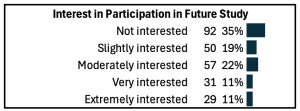
- While 35% weren’t interested in future studies, 44% showed research interest on this topic (combining “moderately,” “very,” and “extremely interested”)
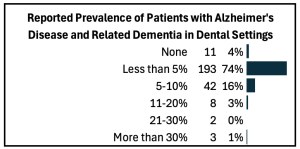
ADRD still represents a relatively small proportion of their patient panel, but nearly all encounter these patients in routine care
While the majority of the 259 dental providers who responded to the Quick Poll indicated that ADRD patients comprise a small proportion of their patient population, only 4% reported having no ADRD patients. Most providers (74%) estimated that fewer than 5% of their patients have ADRD, 16% reported that 5-10% of their patients are affected, and 3% reported that 11-20% of their patient population has ADRD. A small minority (1%) indicated that more than 20% of their patients have ADRD, indicating that cognitive impairment is a routine, though low-frequency, component of dental practice across most practices.
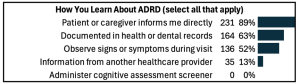
Dental providers primarily relied on informal or passive mechanisms to identify patients with ADRD
Nearly all respondents (89%) learned about a patient’s cognitive status through direct communication from the patient or caregiver, and 63% reported that ADRD was documented in health or dental records. Over half (52%) indicated that they recognized ADRD based on observed signs or symptoms of cognitive impairment during dental visits. In contrast, only 13% reported receiving this information from another healthcare provider, and no respondents (0%) reported using a formal cognitive screening tool such as the Montreal Cognitive Assessment (MoCA) within the dental setting.
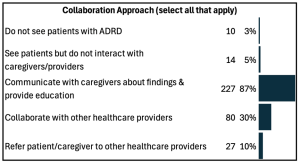
Collaboration with Caregivers and Healthcare Providers
Most providers reported active engagement with caregivers in the management of oral health for patients with ADRD. Specifically, 87% indicated that they communicate with caregivers about clinical findings and provide education on home oral care. However, fewer providers (30%) reported collaborating with other healthcare providers through activities such as sharing records, discussing findings, or addressing barriers to oral hygiene. Only 10% reported referring patients or caregivers to other healthcare providers for ADRD management or support. A small proportion (5%) reported seeing patients with ADRD but not interacting with caregivers or other providers, and 3% indicated that they do not see patients with ADRD at all.
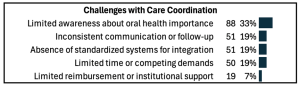
Key Challenges in Coordinating Oral Care & Hygiene
Respondents identified several barriers to effectively integrating oral health into the broader care of patients with ADRD. The most commonly reported challenge was limited awareness among caregivers and other healthcare providers regarding the importance of oral health in ADRD care, endorsed by 33% of respondents. Additional barriers included inconsistent communication or follow-up from caregivers or healthcare providers (19%), absence of standardized systems for integrating oral health recommendations into overall care plans (19%), and limited time or competing demands faced by caregivers and providers (19%). Fewer respondents (7%) cited limited reimbursement or institutional support for care coordination as a primary barrier.
Interest in Future Studies
Despite these challenges, there was substantial interest in participating in a study designed to improve coordination of oral hygiene management for patients with ADRD. Overall, 44% of respondents reported being moderately (22%), very (11%), or extremely (11%) interested in such a study. An additional 19% were slightly interested, while 35% reported no interest. These findings suggest that a majority of dental providers express at least some willingness to engage in research aimed at strengthening caregiver and healthcare provider coordination for patients with ADRD.
What This Means for Our Network
These Quick Poll findings highlight that you are already doing important work to support patients with ADRD and their caregivers, often with limited systems-level support. At the same time, there is a strong opportunity for our Network to develop studies that strengthen medical–dental integration, streamline communication, and make oral health a more visible part of ADRD care. Stay tuned to the Network blog at www.nationaldentalpbrn.org for updates as we use these results to shape future observational and intervention studies.
See past Quick Polls
Click here to view a list of all of our past Quick Polls and their results.
Interested in Becoming a Member?
Related Posts